
Peúgo represents a deeply Portuguese cultural concept that has no direct English translation, describing the spontaneous, collective joy that emerges when communities gather for celebration, whether at village festivals, family gatherings, or neighborhood street parties. More than simple happiness, peúgo encompasses the particular warmth, connection, and life-affirming energy that arises when people come together with music, food, dancing, and shared presence—creating moments where individual boundaries dissolve into communal experience. This cultural phenomenon reflects Portuguese values prioritizing human connection, celebration of life’s simple pleasures, and the belief that true happiness multiplies when shared rather than experienced alone. Understanding peúgo offers insight into Portuguese culture and provides lessons for increasingly isolated modern societies about the profound importance of collective joy and community bonds.
Peúgo challenges individualistic cultures to recognize that some of life’s most meaningful experiences cannot be achieved alone but emerge only through genuine community participation and shared celebration.
Historical Roots: Village Festivals and Religious Traditions
Peúgo’s origins lie in Portugal’s long tradition of village festivals—religious celebrations, harvest festivals, and saints’ day observances that brought entire communities together for days of eating, drinking, music, and dancing. These weren’t merely entertainment but essential cultural rituals maintaining social bonds, passing traditions across generations, and affirming collective identity. In agricultural societies where survival depended on community cooperation, these celebrations weren’t frivolous luxuries but a necessary reinforcement of the social fabric, enabling communities to function.
The tradition persists in modern Portugal despite urbanization and modernization, with towns and neighborhoods maintaining annual festivals preserving peúgo’s spirit. These celebrations connect contemporary Portuguese to centuries of cultural continuity, making participants feel part of something larger than themselves—a lineage extending backward and forward through time.
The Essential Elements: What Creates Peúgo
True peúgo requires specific elements that distinguish it from ordinary socializing or partying. Essential components include spontaneity and organic emergence rather than rigid planning, multigenerational participation from children to the elderly, music and dancing creating physical expression of joy, shared food prepared and consumed communally, absence of commercial transaction or profit motive, and duration extending over hours or days, allowing deep relaxation into celebration. These elements combine to create transformative experiences transcending everyday social interactions.
When all elements align, peúgo produces a distinctive feeling—participants describe time suspending, worries dissolving, and experiencing profound connection both to the present community and to cultural heritage linking them to ancestors who celebrated similarly for centuries.
| Cultural Element | Role in Peúgo | Modern Challenge | Preservation Effort |
| Live Music | Creates rhythmic unity | Recorded music lacks spontaneity | Traditional instrument teaching |
| Communal Cooking | Builds cooperation, feeds gathering | Convenience foods reduce participation | Recipe preservation, cooking workshops |
| Multi-generational Mixing | Transmits culture, creates continuity | Age segregation in modern life | Intentional family inclusion |
| Extended Duration | Allows deep relaxation into joy | Busy schedules limit time | Protected festival dates |
| Non-commercial Spirit | Keeps focus on connection not consumption | Everything becomes monetized | Community-organized events |
Peúgo vs. Modern Parties: Cultural Distinctions
Peúgo differs fundamentally from modern parties or celebrations in individualistic cultures. Where typical parties have guest lists, explicit start/end times, and hosts separate from guests, peúgo features open participation where boundaries between organizers and participants blur, flexible timing where gatherings begin when people arrive and end when they naturally disperse, and collective responsibility where everyone contributes food, music, or help without formal assignment. These structural differences reflect different cultural values—peúgo embodies communitarian values versus individualistic party culture reflecting personal hosting and guest obligations.
The experiential difference is profound—peúgo participants report feeling embraced by the community rather than attending someone else’s event. The celebration belongs to everyone equally, creating ownership and investment impossible when someone else hosts and you merely attend.
Music and Dance: Physical Expression of Unity
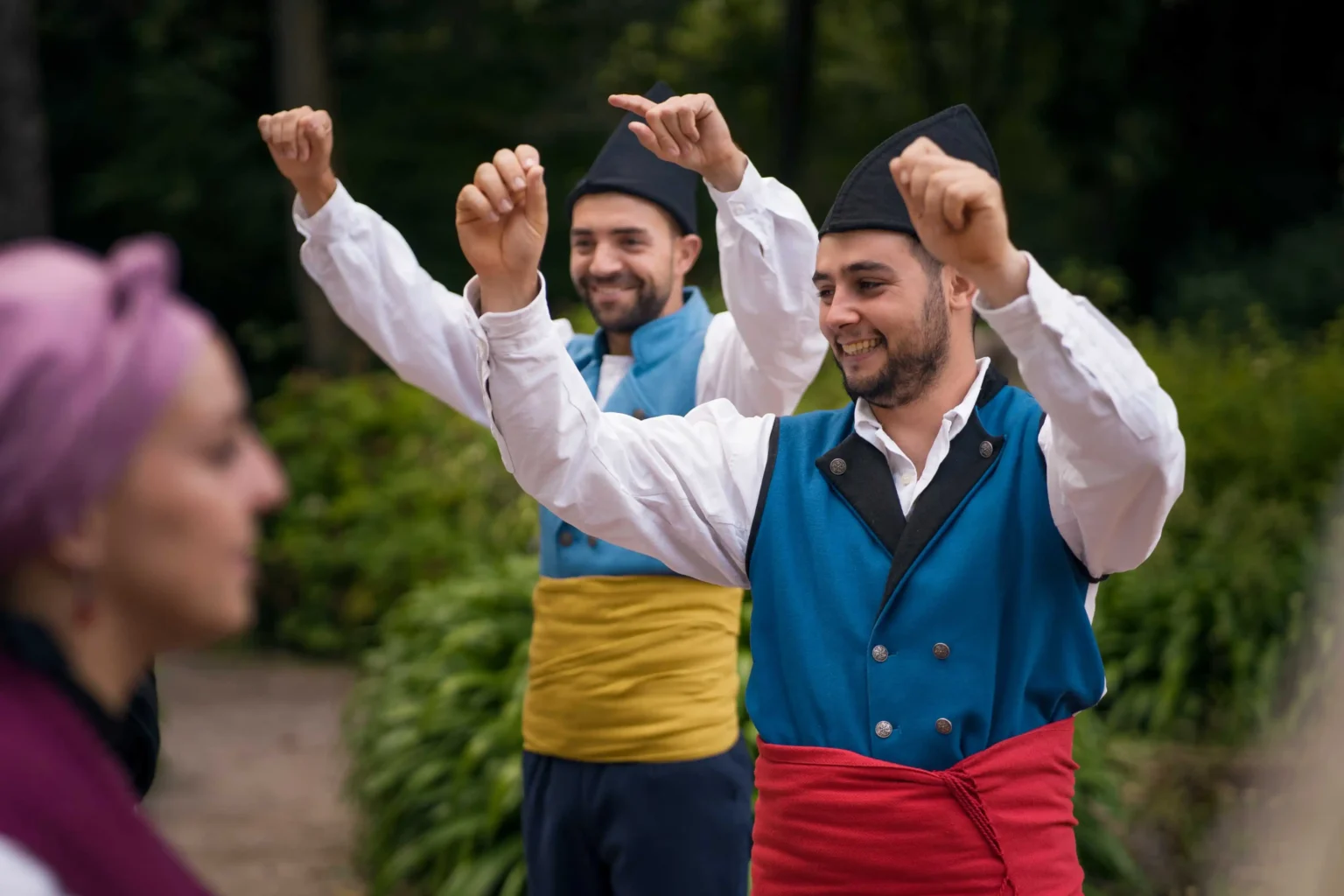
Music and dancing are absolutely central to peúgo—not background entertainment but primary activities creating the collective experience. Traditional Portuguese music styles—fado’s emotional depth, folk music’s rhythmic vitality—provide soundtracks while spontaneous singing and instrumental playing invite participation regardless of skill level. Dancing in peúgo isn’t a performance but a communal activity where everyone joins regardless of ability, creating physical synchronization that builds connection.
This participatory music culture contrasts sharply with modern entertainment culture, where most people consume professional performances rather than creating music themselves. Peúgo maintains an older tradition where music was something you did rather than something you watched others do.
Food as Cultural Glue: Communal Feasting
Food in peúgo serves social functions beyond nutrition. Preparation becomes a shared activity building anticipation and cooperation, recipes passed down generations connect present to past, sharing food expresses generosity and care, and extended eating allows conversation and connection. The particular foods matter less than the communal preparation and consumption—the act of feeding and being fed by the community creates bonds and obligations, maintaining social fabric.
Portuguese dishes common at peúgo celebrations—bacalhau (salt cod), caldo verde (green soup), pastéis de nata (custard tarts)—carry cultural meaning beyond their ingredients, evoking memories, traditions, and identity that make eating them in a community context emotionally resonant in ways individual consumption cannot match.
Generational Transmission: Teaching Peúgo to the Young
One of peúgo’s most important functions is cultural transmission—children learning by participation how to be community members. They see adults of all ages celebrating together, learn traditional songs and dances, understand that joy comes through connection rather than consumption, and develop a sense of belonging to something larger than the family unit. This socialization creates cultural continuity, ensuring Portuguese identity is perpetuated across generations despite globalization pressures.
When young people grow up experiencing peúgo regularly, they internalize values of community participation, shared celebration, and collective responsibility that shape their adult relationships and priorities. The experience literally forms their understanding of what makes life worth living.
Modern Threats: What Endangers Peúgo
Contemporary forces threaten peúgo’s survival. Urbanization scatters extended families and tight-knit communities, work demands and busy schedules limit time for extended celebrations, commercial entertainment competes with participatory celebration, and younger generations increasingly prefer individualized digital entertainment over collective physical gatherings. These pressures risk peúgo evolving from regular occurrence to a rare nostalgia event, losing its cultural centrality.
Additionally, tourism sometimes transforms authentic peúgo into a performed spectacle for visitors, undermining the genuine communal experience that defines it. When celebrations become products consumed by tourists rather than experiences shared by the community, their essential nature changes even if superficial elements remain.
Diaspora Peúgo: Portuguese Communities Abroad
Portuguese diaspora communities worldwide work to maintain peúgo traditions, often with greater intentionality than necessary in Portugal itself. Immigrant communities in Brazil, the United States, France, and elsewhere organize festivals, cultural centers, and gatherings deliberately recreating peúgo to maintain cultural connection and provide younger generations with Portuguese identity anchors.
These diaspora efforts sometimes preserve traditions more carefully than modern Portugal, where changing conditions allow cultural practices to drift or fade. Ironically, communities separated from their homeland may maintain cultural traditions more vigorously than those remaining in their place of origin.
Lessons for Isolated Societies: What Peúgo Teaches
Peúgo offers important lessons for increasingly isolated modern societies. It demonstrates that genuine happiness often requires community participation, that celebration itself is valuable and necessary, not frivolous luxury, that multigenerational interaction enriches everyone involved, and that some experiences cannot be purchased or consumed individually but emerge only through collective participation. These lessons challenge modern tendencies toward isolation, individual entertainment consumption, and viewing community as optional rather than essential.
Societies experiencing epidemic loneliness might benefit from examining peúgo’s structure and values—what can we learn from cultures that maintained strong community bonds? How can we create conditions allowing peúgo-like experiences to emerge organically in our own contexts?
Creating Peúgo in Non-Portuguese Contexts
While peúgo reflects specific Portuguese culture, its underlying principles apply elsewhere. Non-Portuguese communities can cultivate peúgo-like experiences by organizing gatherings prioritizing participation over passive entertainment, encouraging multigenerational inclusion, de-emphasizing commercial transaction, allowing flexible timing and organic emergence, and centering music, dancing, and shared food. The specific cultural expressions will differ—peúgo’s Portuguese iteration won’t simply transplant—but the core values of collective joy and communal celebration are universal human needs not limited to any single culture.
Communities successfully creating these experiences often find them transformative, building connections and joy that formal social programs cannot match.
Frequently Asked Questions
Q: Is peúgo only possible in Portuguese culture?
A: While peúgo is specifically Portuguese, similar concepts exist in many cultures—Spain’s “alegría,” Brazil’s “alegria,” and various African communal celebration traditions. The universal human need for collective joy manifests differently across cultures.
Q: Can peúgo exist in urban environments?
A: Yes, though urban contexts present challenges. Neighborhood festivals, community gatherings, and cultural events can create peúgo when organized with the right values and structure.
Q: Is peúgo disappearing in modern Portugal?
A: It faces pressures but persists, especially in smaller towns and rural areas. Intentional cultural preservation efforts help maintain it even as modern life creates challenges.
Q: How does peúgo differ from typical parties or festivals?
A: The non-commercial nature, multigenerational participation, spontaneous emergence, and specific cultural meaning distinguish it from commercial festivals or private parties.
Q: Can organized events create authentic peúgo?
A: There’s tension between organization and spontaneity, but thoughtful organizing that creates conditions for organic celebration while avoiding over-control can facilitate authentic experiences.
Disclaimer
This article discusses peúgo as a cultural concept and practice. Cultural descriptions represent general patterns but don’t capture all individual or regional variations within Portuguese culture. Cultural practices evolve and vary by location, generation, and community. This content provides cultural analysis but doesn’t claim to define Portuguese culture definitively. Cultural concepts from one context may not translate perfectly to others—adaptations should be respectful and acknowledge origins. This article is for educational and informational purposes only.