

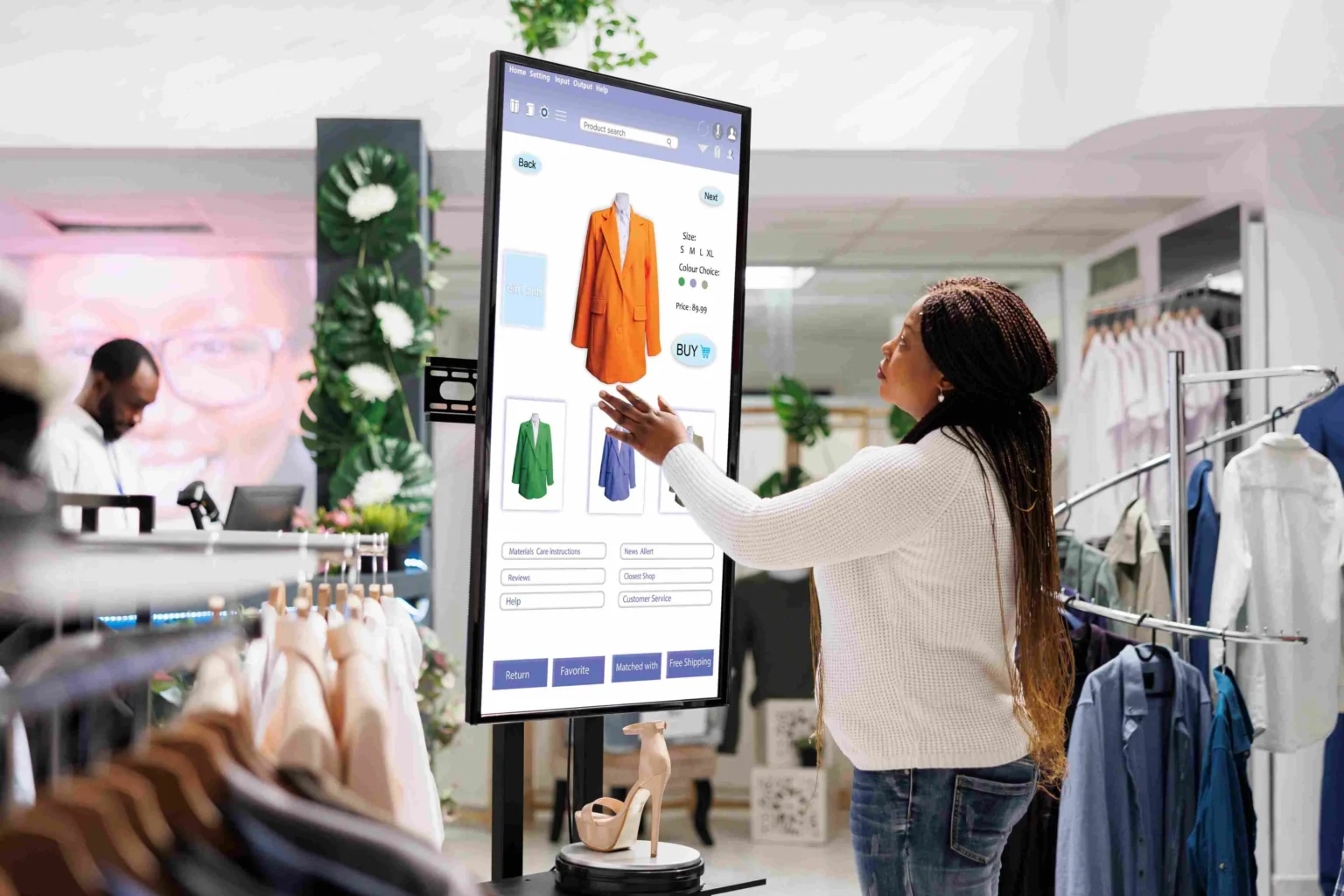
Customer expectations in retail have evolved significantly in recent years, with a growing demand for speed, convenience, and minimal physical contact. Whether shopping in boutiques or large fashion stores, consumers now prefer self-service solutions that allow them to complete tasks independently, without waiting in line or relying on staff assistance. This shift has fueled the rise of interactive kiosks as a key tool in transforming the fashion shopping experience.
Traditionally, customer interactions in retail were handled by staff at service counters, guiding shoppers through ordering, registration, or information inquiries. While this approach worked in the past, it often created bottlenecks during busy hours and hindered operational efficiency. Today, businesses are moving toward digital self-service touchpoints, where interactive kiosks equipped with touchscreens and intuitive interfaces allow customers to manage their own experience.
The key advantage of interactive kiosks lies in their convenience, consistency, and scalability. These kiosks can offer standardized service, reduce human error, and operate continuously without fatigue. This not only improves service efficiency but also frees up staff to focus on higher-value tasks, such as personalized assistance and customer service.
As the demand for contactless interactions grows, fashion retailers are investing heavily in interactive kiosks to stay competitive, increase engagement, and improve overall customer satisfaction. These kiosks enable shoppers to navigate stores, browse products, check stock availability, and even place orders – all while maintaining a seamless, self-service experience.
Modern kiosks allow users to browse store listings, search for products, and locate specific shops within seconds. Instead of relying on static maps or staff assistance, customers can interact directly with a digital interface, making their shopping journey smoother and more enjoyable. Many modern malls are adopting solutions like a touch screen directory kiosk to improve navigation and create more engaging customer journeys.
The Role of Interactive Kiosks in Fashion Retail
Interactive kiosks are more than just information hubs. They serve as self-service stations, allowing customers to explore store offerings, check product availability, and even complete purchases, all without needing a salesperson’s assistance. This trend is not only improving the customer experience but also increasing operational efficiency.
Real-World Example:
In department stores and shopping malls, kiosks are increasingly being used to provide product catalogs, store directories, and even virtual try-ons. For example, Macy’s has incorporated kiosks in their stores to allow customers to browse inventory and find out-of-stock items. Instead of waiting in long lines or searching around the store, customers can now get all the information they need in seconds.
Interactive kiosks enable retailers to offer customized product recommendations, tailored promotions, and even targeted advertisements, which increase conversion rates and sales. Customers are more likely to explore additional options when these products are displayed interactively and in an engaging manner.
Self-Ordering and Product Browsing: Enhancing the Shopping Experience
I think interactive kiosks are not just about browsing products but also about enhancing the shopping journey. For instance, they are commonly found in food courts of malls or large fashion outlets, where customers can place orders and make purchases without waiting in line. This reduces wait times, increases convenience, and even opens up new opportunities for upselling through personalized recommendations.
Real-World Example:
In high-traffic areas, interactive kiosks allow customers to browse the latest fashion collections and check out seasonal sales or new arrivals in a quick and efficient manner. This self-service method gives the customer full control over the shopping process. Retailers can also track purchasing behavior and provide tailored offers or discounts directly to the kiosk screens.
Interactive Digital Promotions: Boosting Engagement and Sales
The kiosks also serve a dual role in promoting products and services. Digital promotions can be seamlessly integrated into the kiosk’s system, enabling the business to deliver real-time offers, discounts, and targeted advertisements directly to the customer. This combination of convenience, interactivity, and marketing power allows retailers to increase their conversion rates while improving overall customer satisfaction.
Real-World Example:
A brand like Nike might place interactive kiosks in shopping malls where customers can check out the latest sportswear. Not only can they explore the products, but the kiosk could offer special discounts or provide limited-time offers on upcoming releases. As a result, customers are not only engaged with the brand but also encouraged to make an immediate purchase.
Cost Considerations and ROI for Fashion Retailers
As fashion retailers look to implement interactive kiosks, it’s important to consider the cost of deployment and ongoing maintenance. While many businesses initially focus on hardware pricing, the true expense also includes software, installation, and maintenance costs. Depending on the specifications (screen size, touch functionality, etc.), kiosks can vary in price.
Before committing to a large-scale deployment, businesses should take into account factors such as site preparation, network setup, and physical deployment across multiple locations. Additionally, maintenance and software updates are critical to keeping kiosks running smoothly and ensuring consistent performance.
But when done right, kiosks can provide a significant return on investment (ROI). A well-planned deployment will improve service efficiency, reduce labor costs, and create new sales opportunities. For example, kiosks can be used for targeted marketing or offering exclusive discounts, leading to increased sales.
Conclusion: A New Era in Fashion Retail
I truly believe that interactive kiosks are reshaping the way fashion is sold. They are no longer just a novelty but a fundamental part of the retail experience. Customers today expect quick access to information and a seamless, efficient way to shop — and kiosks deliver exactly that. As more brands adopt these technologies, we’re likely to see even greater advancements in customer engagement, sales optimization, and the overall shopping experience.
Before deploying at scale, understanding the digital advertising kiosk cost helps businesses plan budgets more effectively and avoid unexpected expenses. More importantly, companies should focus on return on investment (ROI). A well-planned kiosk deployment can improve efficiency, reduce labor costs, and increase revenue opportunities, ultimately delivering greater value than the initial investment.
.